Building Scatter Terrain: A Statue Hidden Among the Trees
Scatter terrain is one of the easiest ways to make a tabletop roleplaying game feel more alive. A few small terrain pieces can turn an open battle map into a forgotten ruin, a forest shrine, an old battlefield, or a place where the players immediately start asking questions.
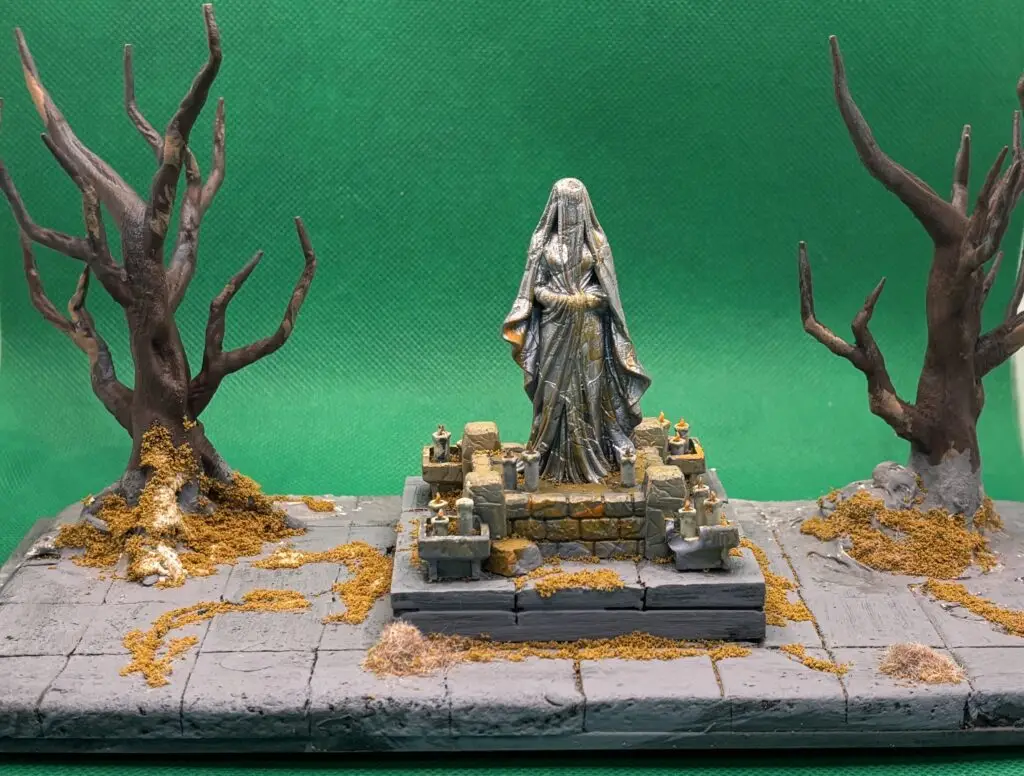
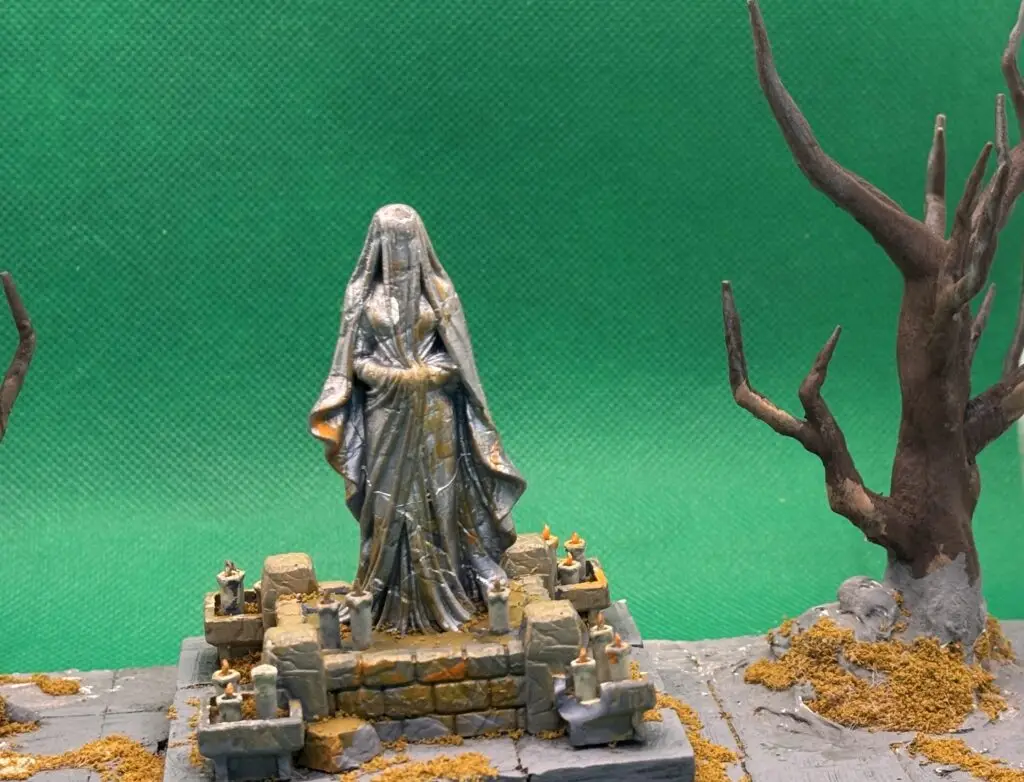
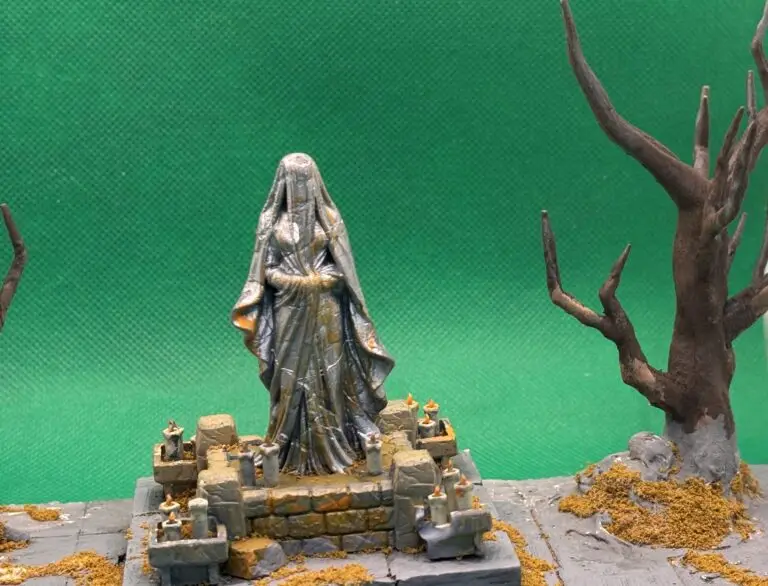
For this project, I built a small terrain piece featuring a statue surrounded by two dead trees. It is simple enough to make without needing a large list of materials, but it adds a lot of atmosphere to the table. This kind of piece works well for fantasy RPGs, skirmish games, dungeon encounters, or any scene that needs a little more visual storytelling.
Starting with the Base
The base was cut from MDF using a laser cutter. MDF makes a strong foundation for scatter terrain because it is flat, durable, and heavy enough to keep the piece from sliding around during play. No reason for you to have to use a laser cutter, A saw will work just fine.
Once the base was ready, I added the ground and stone pattern using foam. The foam was cut to shape, then detailed with an X-Acto knife and a pen. This is a simple way to create the look of stonework, cracked ground, or an old path without needing to sculpt every detail from scratch.
The goal was not to make the surface perfectly clean. Terrain often looks better when it has a little wear and unevenness to it, especially if the piece is meant to represent something old, abandoned, or weathered.
Adding the Statue and Trees
The statue and trees were resin-printed. Resin printing is great for this kind of project because it captures fine details, especially on small decorative pieces like statues, branches, bark, or ruins. You could use many other objects, from toys, train terrain, or make the trees with wire and paper-mache
After printing, the statue and trees were painted separately before being attached to the base. Painting these parts before gluing them down made it easier to reach all the details, especially around the lower sections of the trees and the statue.
The statue gives the piece a focal point. It turns the terrain from “some trees on a base” into something that suggests a story. Is it a forgotten monument? A shrine to an old god? A marker for a buried tomb? A warning? That is the fun of scatter terrain: it does not need to explain everything, but it should make the table feel like something happened there.
Sealing and Strengthening
For the terrain surface, I used a mixture of Mod Podge and black paint. This step helps seal the foam while also creating a dark base coat. Foam can be fragile, and some paints or sprays can damage it, so sealing it is important.
The black paint in the mixture also helps with the painting process later. It gets into the cracks and low areas, creating shadows before the drybrushing and final colors go on.
Once the pieces were painted and sealed, everything was glued together.
Blending the Trees into the Base
After the trees were attached, I used spackle around the bottoms of the trunks. This helps blend them into the terrain so they do not look like printed pieces simply glued on top of a flat surface.
Spackle is useful for hiding seams, building up small areas of ground texture, and making the whole piece feel more natural. Once it dried, I painted the base and the spackled areas to bring everything together. I even add a little flocking just to give it the extra touch of realism.
Final Thoughts
This statue-and-trees scatter terrain piece is a good example of how a few simple materials can create something useful and atmospheric for the table. MDF provides the structure, foam creates the ground detail, resin prints add the main visual elements, and spackle helps blend everything into one finished piece.
The result is a small terrain feature that can be dropped into many different encounters. It could be a forest shrine, an overgrown ruin, a landmark on a road, or the center of a mysterious clearing. Pieces like this are easy to reuse, and they give players something interesting to move around, investigate, or fight over.
Scatter terrain does not have to be complicated to be effective. Sometimes all it takes is a base, a few trees, a statue, and a little imagination.